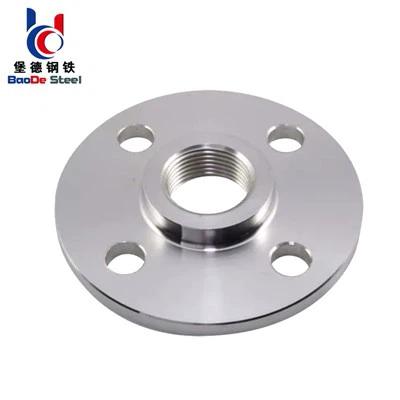
As a seasoned supplier of sw flanges, I've witnessed firsthand the crucial role these components play in various industrial applications. The performance of socket weld (sw) flanges is influenced by a multitude of factors that need careful consideration. In this blog, I'll delve into these factors to provide a comprehensive understanding for those involved in the procurement and use of sw flanges.
Material Quality
The material used in the manufacturing of sw flanges is the cornerstone of their performance. Different materials offer varying levels of strength, corrosion resistance, and temperature tolerance. Common materials for sw flanges include carbon steel, stainless steel, and alloy steel.
Carbon steel is widely used due to its affordability and good strength. However, it is prone to corrosion, especially in environments with high humidity or exposure to chemicals. For applications where corrosion is a concern, stainless steel is a better choice. Stainless steel contains chromium, which forms a passive oxide layer on the surface, protecting the flange from rust and corrosion. Alloy steel, on the other hand, combines the properties of different metals to achieve specific performance characteristics, such as high strength at elevated temperatures.
When selecting sw flanges, it's essential to choose the right material based on the operating conditions. For example, in a chemical processing plant where the flange will be exposed to corrosive chemicals, Socket Weld Flanges made of high - grade stainless steel would be more suitable.
Manufacturing Process
The manufacturing process of sw flanges significantly impacts their performance. Precision in manufacturing ensures proper fit and functionality. The key steps in the manufacturing process include forging, machining, and heat treatment.
Forging is the process of shaping the metal by applying compressive forces. A well - forged flange has a dense and uniform grain structure, which enhances its strength and toughness. Machining is then used to achieve the required dimensions and surface finish. Any inaccuracies in machining can lead to problems such as improper alignment during installation, which can cause leaks and reduce the overall performance of the flange.
Heat treatment is another critical step. It can improve the mechanical properties of the flange, such as hardness and ductility. For example, quenching and tempering can increase the strength of the flange while maintaining a certain level of toughness. A supplier with advanced manufacturing facilities and strict quality control measures can ensure that the sw flanges meet the required standards.
Design and Dimensions
The design and dimensions of sw flanges are carefully engineered to meet specific application requirements. The size of the flange, including the diameter, thickness, and bolt hole pattern, must be compatible with the pipes and other components in the system.
An incorrect flange size can lead to stress concentration, which may cause the flange to fail under pressure. The socket depth and diameter also need to be precisely designed to ensure a proper fit with the pipe. A loose fit can result in leakage, while a tight fit may make installation difficult and can damage the flange or the pipe.
For instance, a 1 Inch Socket Welded Flange must have the correct internal and external dimensions to be effectively used with a 1 - inch pipe. Standardization of flange designs is crucial, as it allows for interchangeability and simplifies the procurement process.
Welding Quality
Since sw flanges are connected to pipes through socket welding, the quality of the weld is of utmost importance. A poor - quality weld can compromise the integrity of the entire joint. Factors that affect welding quality include the welding technique, welder skill, and welding parameters.
There are different welding techniques available, such as shielded metal arc welding (SMAW), gas tungsten arc welding (GTAW), and gas metal arc welding (GMAW). Each technique has its advantages and disadvantages, and the choice depends on the material, thickness, and application requirements.
The skill of the welder is also a critical factor. A trained and experienced welder can ensure proper fusion, penetration, and bead appearance. Welding parameters, such as current, voltage, and welding speed, need to be carefully controlled to achieve a high - quality weld. Improper welding parameters can lead to defects such as porosity, cracks, and lack of fusion, which can weaken the joint and reduce the performance of the sw flange.
Operating Conditions
The operating conditions under which sw flanges are used have a direct impact on their performance. Factors such as pressure, temperature, and the nature of the fluid or gas being transported play a significant role.


High - pressure applications require flanges with sufficient strength to withstand the forces exerted on them. If the pressure exceeds the rated capacity of the flange, it can lead to deformation or even rupture. Similarly, extreme temperatures can affect the mechanical properties of the flange material. At high temperatures, the strength of the material may decrease, while at low temperatures, it may become brittle.
The nature of the fluid or gas being transported is also important. Corrosive substances can gradually degrade the flange over time, especially if the material is not resistant to corrosion. Abrasive fluids can cause wear on the flange surface, reducing its lifespan.
Installation and Maintenance
Proper installation and maintenance are essential for ensuring the long - term performance of sw flanges. During installation, it's important to follow the manufacturer's guidelines and industry standards. This includes cleaning the mating surfaces, applying the correct torque to the bolts, and ensuring proper alignment.
Improper installation can lead to problems such as leaks, misalignment, and premature failure. Regular maintenance is also crucial. This may involve inspecting the flanges for signs of corrosion, wear, or damage, and replacing any worn - out components in a timely manner.
In conclusion, the performance of sw flanges is affected by a complex interplay of factors, including material quality, manufacturing process, design and dimensions, welding quality, operating conditions, and installation and maintenance. As a supplier, I understand the importance of providing high - quality sw flanges that meet the diverse needs of our customers. If you are in the market for sw flanges and want to discuss your specific requirements, I encourage you to reach out for a procurement consultation.
References
- ASME B16.5 - Pipe Flanges and Flanged Fittings
- ASTM Standards for Steel Flanges
- Welding Handbook, American Welding Society