

The Best Tee Pipe Fitting Manufacture!
Tianjin baode steel co.,ltd we mainly produce seamless steel pipes, erw steel pipes,lsaw steel pipe and ssaw steel pipe,stainless steel, alloy steel elbows, tees, reducers, flanges and other pipe fittings.
Why Choose Us
Product Application
Pipe fittings are widely used in pipeline connections in industries such as chemical, petroleum, power, and steam.
Our Certificate
ISO9001,ISO14001,ISO45001,AAA Credit Enterprise.
Production Market
Our company's pipe fittings are exported to more than 40 countries and regions including North America, South America, Southeast Asia, the Middle East, and Africa, and have received unanimous praise from domestic and foreign customers.
Our Service
Product explanation, answering questions, providing solutions, product quotation. Update production progress in a timely manner, provide multiple payment methods, logistics delivery. Shipping schedule updates, pre arrival reminders, customer follow-up tracking services.
-
![10 Inch SCH40S ASTM A403 WP316L Stainless Steel Pipe Tee Fittings]() 10 Inch SCH40S ASTM A403 WP316L Stainless Steel Pipe Tee ...10 Inch SCH40S ASTM A403 WP316L Stainless Steel Pipe Tee Fittingsread more
10 Inch SCH40S ASTM A403 WP316L Stainless Steel Pipe Tee ...10 Inch SCH40S ASTM A403 WP316L Stainless Steel Pipe Tee Fittingsread more -
![ASTM A234 WP5 Alloy Steel Tee Fittings]()
-
![High Temperature And High Pressure Heavy-duty Forged Tee Fittings]() High Temperature And High Pressure Heavy-duty Forged Tee ...High temperature and high pressure heavy-duty forged tee fittingsread more
High Temperature And High Pressure Heavy-duty Forged Tee ...High temperature and high pressure heavy-duty forged tee fittingsread more -
![ASTM A403 WP316L Stainless Steel Pipe Fittings Equal Tee]() ASTM A403 WP316L Stainless Steel Pipe Fittings Equal TeeASTM A403 WP316L Stainless Steel Pipe Fittings Equal Teeread more
ASTM A403 WP316L Stainless Steel Pipe Fittings Equal TeeASTM A403 WP316L Stainless Steel Pipe Fittings Equal Teeread more -
![Barred Tee]() Barred TeeProducts:Barred Tee Equal Barred Tee,ASTM A234 WPB,BW,ASME B16.9,Plate Bars and Spacer Bars ASTM A234 WPB Black Painted internal and external,Three universal grid style tees for pipe cleaning to prevent the cleaning ball from getting stuckread more
Barred TeeProducts:Barred Tee Equal Barred Tee,ASTM A234 WPB,BW,ASME B16.9,Plate Bars and Spacer Bars ASTM A234 WPB Black Painted internal and external,Three universal grid style tees for pipe cleaning to prevent the cleaning ball from getting stuckread more -
![Mild Steel Tee Section]() Mild Steel Tee SectionProducts:mild steel tee section Main processing techniques: raw materials entering the factory → cutting into blanks → flattening to size requirements → heating to create convex openings → hot extrusion molding →read more
Mild Steel Tee SectionProducts:mild steel tee section Main processing techniques: raw materials entering the factory → cutting into blanks → flattening to size requirements → heating to create convex openings → hot extrusion molding →read more -
![Carbon Steel Reducing Tee]() Carbon Steel Reducing TeeProducts:Carbon steel reducing tee Standard: ASTM A234 Steel Grade: WPB Carbon steel reducing tee: a critical connector in pipeline systems 1. Overview Carbon steel reducing tee is a common pipe fitting in pipeline systems, used to connectread more
Carbon Steel Reducing TeeProducts:Carbon steel reducing tee Standard: ASTM A234 Steel Grade: WPB Carbon steel reducing tee: a critical connector in pipeline systems 1. Overview Carbon steel reducing tee is a common pipe fitting in pipeline systems, used to connectread more -
![2 Inch Galvanized Tee]() 2 Inch Galvanized TeeAll galvanized tees are made of high-quality carbon steel, without pores or sand holes. The surface is precision processed and hot-dip plated, and connected by welding. The performance parameters comply with ASTM A234 standard.read more
2 Inch Galvanized TeeAll galvanized tees are made of high-quality carbon steel, without pores or sand holes. The surface is precision processed and hot-dip plated, and connected by welding. The performance parameters comply with ASTM A234 standard.read more -
![22mm Reducing Tee]() 22mm Reducing Tee22mm Reducing tee: A branch pipe with a diameter different from the other two is called a reducing tee. A tee with the same diameter at both ends is called an equal diameter teeread more
22mm Reducing Tee22mm Reducing tee: A branch pipe with a diameter different from the other two is called a reducing tee. A tee with the same diameter at both ends is called an equal diameter teeread more -
![Carbon Steel Reducing Tee Pipe Fitting]() Carbon Steel Reducing Tee Pipe FittingStandard: ASTM A234. Steel Grade: WPB. A234 is an American standard material used for forged carbon steel and alloy steel pipe fittings for medium and high temperature applications carbon steel reducing tee pipe fitting..read more
Carbon Steel Reducing Tee Pipe FittingStandard: ASTM A234. Steel Grade: WPB. A234 is an American standard material used for forged carbon steel and alloy steel pipe fittings for medium and high temperature applications carbon steel reducing tee pipe fitting..read more -
![Carbon Steel Equal Tee]() Carbon Steel Equal TeeStandard: ASTM A234. Steel Grade: WPB. Carbon Steel Equal Tee is a type of tee. The three pipes of the equal diameter tee have equal diameters, mainly because there is no difference in the diameters of the primary and secondary pipes whenread more
Carbon Steel Equal TeeStandard: ASTM A234. Steel Grade: WPB. Carbon Steel Equal Tee is a type of tee. The three pipes of the equal diameter tee have equal diameters, mainly because there is no difference in the diameters of the primary and secondary pipes whenread more -
![110mm Branch Tee]() 110mm Branch TeeStandard: ASTM A234. Steel Grade: WPB. Out Diameter of our branch tee scope: 1/2”-80”.read more
110mm Branch TeeStandard: ASTM A234. Steel Grade: WPB. Out Diameter of our branch tee scope: 1/2”-80”.read more


Types of Pipe Fitting Tees
Equal Tee (EQ Tee): An equal tee has three outlets of the same size, forming a 90-degree branch connection.
Straight Tee: A straight tee, also known as a straight-through tee, has a single inlet and two outlets, forming a 90-degree branch connection.
Reducing Tee: A reducing tee has one inlet and two outlets of different sizes, allowing for a branch connection with different pipe diameters.
Carbon Steel Tee (CS Tee): A carbon steel tee is made from carbon steel materials, such as ASTM A234WPB, A234WPC, A420WPL6, Q235, 10#, A3, Q235A, 20G, 16Mn, DIN St37, St45.8, St52.4, St.35.8.
Alloy Steel Tee (AS Tee): An alloy steel tee is constructed from alloy steel materials, including 16Mn, Cr5Mo, 12Cr1MoV, 10CrMo910, 15CrMo, 12Cr2Mo1, A335P22, St45.8, ASTM A860 WPHY X42, X52, X60, X70.
Stainless Steel Tee (SS Tee): A stainless steel tee is made from stainless steel materials, such as 1Cr18Ni9Ti, 0Cr18Ni9, 00Cr19Ni10, 0Cr17Ni12Mo2Ti, 00Cr17Ni14Mo2, 304, 304L, 316, 316L.
Lateral Tee: A lateral tee, also known as a side outlet tee, has one inlet and two outlets at a 45-degree angle, allowing for a branch connection in a different direction.
Barred Tee: A barred tee has a bar or a restriction in the branch outlet, which helps to control the flow or prevent pigging.
Steel Saddle Tee: A steel saddle tee is a type of tee that is used to create a branch connection on an existing pipeline without the need for cutting or welding.
Pipe Tee Dimensions As Per ASME B16.9
|
NOMINAL PIPE SIZE |
OUTSIDE DIAMETER |
CENTER TO END |
LENGTH |
|
Inch. |
OD |
C |
M |
|
1/2 |
21.3 |
25 |
25 |
|
3/4 |
26.7 |
29 |
29 |
|
1 |
33.4 |
38 |
38 |
|
1 1/4 |
42.2 |
48 |
48 |
|
1 1/2 |
48.3 |
57 |
57 |
|
2 |
60.3 |
64 |
64 |
|
2 1/2 |
73 |
76 |
76 |
|
3 |
88.9 |
86 |
86 |
|
3 1/2 |
101.6 |
95 |
95 |
|
4 |
114.3 |
105 |
105 |
|
5 |
141.3 |
124 |
124 |
|
6 |
168.3 |
143 |
143 |
|
8 |
219.1 |
178 |
178 |
|
10 |
273.1 |
216 |
216 |
|
12 |
323.9 |
254 |
254 |
|
14 |
355.6 |
279 |
279 |
|
16 |
406.4 |
305 |
305 |
|
18 |
457.2 |
343 |
343 |
|
20 |
508 |
381 |
381 |
|
22 |
559 |
419 |
419 |
|
24 |
610 |
432 |
432 |
|
26 |
660 |
495 |
495 |
|
28 |
711 |
521 |
521 |
|
30 |
762 |
559 |
559 |
|
32 |
813 |
597 |
597 |
|
34 |
864 |
635 |
635 |
|
36 |
914 |
673 |
673 |
|
38 |
965 |
711 |
711 |
|
40 |
1016 |
749 |
749 |
|
42 |
1067 |
762 |
711 |
|
44 |
1118 |
813 |
762 |
|
46 |
1168 |
851 |
800 |
|
48 |
1219 |
889 |
838 |
|
All Dimensions are in mm |
|||
Forged Elbow Specifications & Forged Elbow Material Grades
|
Material Grades |
|
|
Pressure Class |
2000 LBS, 3000 LBS, 6000 LBS, 9000 LBS |
|
Dimension Specifications |
ASME 16.11, MSS SP-79, 83, 95, 97, BS 3799 |
|
Sizes |
1/8″- 4″ (DN6~DN100) |
|
Manufacturing Standards |
ASTM / ASME A/SA 234 Gr. WP 1, WP 5, WP 9, WP 11, WP 12, WP 22, WP 91 |
|
Stainless Steel |
ASTM A182 F304, F304L, F306, F316L, F304H, F309S, F309H, F310S, F310H, F316TI, F316H, F316LN, F317, F317L, F321, F321H, F11, F22, F91, F347, F347H, F904L, ASTM A312/A403 TP304, TP304L, TP316, TP316L The material for forged stainless Elbow conforms to ASME A182 The dimensions for forged stainless steel Elbow conform to ASME B16.11 |
|
Carbon Steel |
ASTM A105, A350 LF2, A106 Gr.B, A234 WPB The material for forged carbon steel Elbow conforms to the requirements of ASTM/ASME A105/SA105 The dimensions for forged carbon steel Elbow conform to ASME B16.11. |
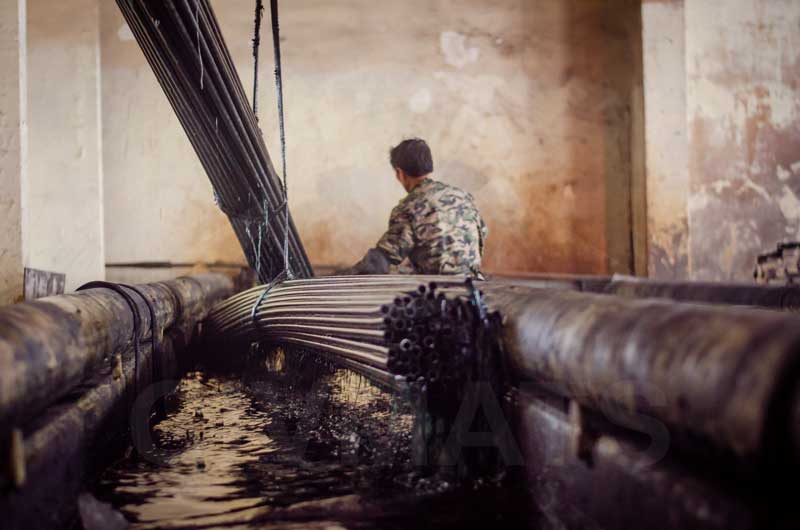
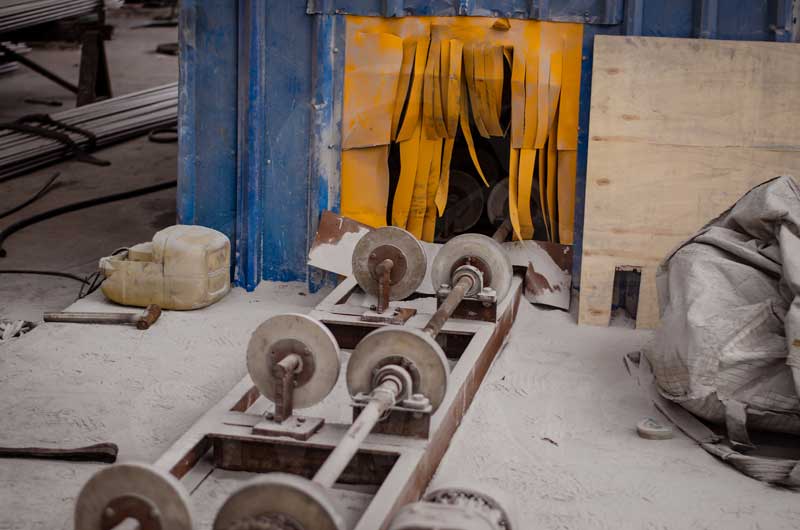
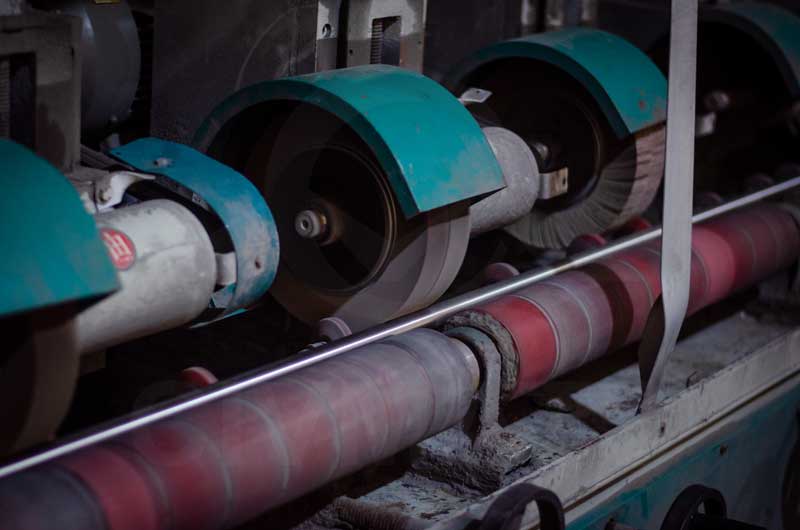
Mechanical Method: Use polishing machine or other machines to remove surface roughness.
Chemical Method: Use alkaline solution to remove oil, acid solution to pickle, and organic solvent to dissolve grease and descaling.
Electrochemical Process: Use electrochemical to remove oils and do electrochemical etching.
Roll finish, centrifugal roll finish, centrifugal pan brightening, rotation brightening, suitable for small pieces with effects of flattening and descaling.
Sand blasting: Applying for large area treatment, with effects of decontamination and removing oxide skin.
Manufacturing Methods of Tee
Hydraulic Bulge Method
To start with hydraulic bulge method uses high pressured fluid to shape the metal or material. The process begins with the receiving inspection of the piece and cutting it to the required size than the hydraulic pressure slowly generates a bulge commonly in the middle of the piece yet, the bulge area can be changed by demand. The bulging method can be represented below figure, at the cold extrusion step, as it can be seen the fluid tries to push the zone that is not supported or pressed intentionally. Then the piece is heated to ensure that it is reliable and rigid. This heat treatment makes the piece almost liquid to have an even distribution of metal and not to have cracks. After the heat treatment, the piece is cleaned and shot blasted, in other words, machining to have a perfect and smooth surface.the piece is coated to resist rust and for other corrosion reasons. This method is not used for the diameter of tees.

Hot Extrusion Method
Like the hydraulic bulge method, the hot extrusion method also starts with an inspection of pieces and cutting. Then the pipe is heated to prepare it for extrusion since cold extrusion can break the pipe. After that, a spherical metal piece pulled through to cut this heating and pulling called forming process. Although this method is called “hot” extrusion and the piece is heated while the forming process, is applied heat treatment to the piece with the same reason in hydraulic bulge method.the rest of the process is the same with the hydraulic bulge method machining, cleaning, beveling, and coating
Methods of Pipe Inspection and Testing
Visual Inspection
Visual inspections involve physically examining pipelines for visible signs of corrosion, cracks, or leaks. It is a fundamental method that serves as a preliminary assessment.
Ultrasonic Testing
Ultrasonic waves are used to detect internal defects in pipelines. This non-destructive method is especially useful for identifying hidden issues.
Magnetic Particle Inspection
This technique detects surface and near-surface defects in ferromagnetic materials by analyzing changes in magnetic fields after applying magnetic particles.
Pressure Testing
By subjecting pipelines to higher-than-normal pressures, pressure testing assesses their ability to withstand operational conditions and identifies potential weaknesses.
The Main Purposes Of Tee Fittings
Connect Three Pipes Together
One of the primary uses of a tee fitting is to connect three pipes together. This can be useful in a variety of plumbing applications, including water supply, drainage, and heating systems. The top opening of the tee is typically used for the main line, while the two bottom openings are used for the branch lines. By using a tee, it is possible to create a three-way intersection in a plumbing system, which can allow for greater flexibility and ease of installation.
Combination With Other Fittings
Tee fittings can also be used in combination with other fittings, such as elbows and couplings, to create more complex plumbing configurations.a tee can be used in conjunction with an elbow to create a 90-degree turn in a pipe system. This can be useful in situations where pipes need to be routed around obstacles or through tight spaces.
Decorative Purposes
In addition to their functional uses, tee fittings can also be used for decorative purposes. For example, in some modern plumbing designs, tees are used as decorative elements to create a unique and visually appealing look. In these cases, tees may be made from more ornate materials, such as polished brass or stainless steel.

Our Factory
The company currently has 3 elbow pushing machines and various types of molds. Capable of producing 1/2 "-24" seamless and slotted elbows through push production, with 6 sets of tee forming machines capable of producing tees of various wall thicknesses from 1/2 "-24". 10 sets of various types of press machines to meet the production of different types of reducer and pipe caps.

Certifications


FAQ
As one of the leading tee pipe fitting manufacturers and suppliers in China, we warmly welcome you to wholesale customized tee pipe fitting made in China here and get pricelist from our factory. For price consultation, contact us.
-
![45 DEG LR,12",BW,SCH 40,ASTM A815 UNS S31803,ELBOW ASME B16.9, NACE MR0175]() 45 DEG LR,12",BW,SCH 40,ASTM A815 UNS S31803,ELBOW ASME B16.9, NACE MR017545 DEG LR,12,BW,SCH 40,ASTM A815 UNS S31803,ELBOW ASME B16.9, NACE MR0175read more
45 DEG LR,12",BW,SCH 40,ASTM A815 UNS S31803,ELBOW ASME B16.9, NACE MR017545 DEG LR,12,BW,SCH 40,ASTM A815 UNS S31803,ELBOW ASME B16.9, NACE MR0175read more -
![ASME B 16.9 ASTM A234 WPB Concentric And Eccentric Reducer]() ASME B 16.9 ASTM A234 WPB Concentric And Eccentric ReducerASME B 16.9 ASTM A234 WPB Concentric and eccentric Reducerread more
ASME B 16.9 ASTM A234 WPB Concentric And Eccentric ReducerASME B 16.9 ASTM A234 WPB Concentric and eccentric Reducerread more -
![10 Inch SCH40S ASTM A403 WP316L Stainless Steel Pipe Tee Fittings]() 10 Inch SCH40S ASTM A403 WP316L Stainless Steel Pipe Tee Fittings10 Inch SCH40S ASTM A403 WP316L Stainless Steel Pipe Tee Fittingsread more
10 Inch SCH40S ASTM A403 WP316L Stainless Steel Pipe Tee Fittings10 Inch SCH40S ASTM A403 WP316L Stainless Steel Pipe Tee Fittingsread more -
![ASTM A420 WPL6 Low Temperature Carbon Steel Elbow Fittings]() ASTM A420 WPL6 Low Temperature Carbon Steel Elbow FittingsASTM A420 WPL6 low temperature carbon steel elbow, purpose-built for -45°C (-50°F) low-temperature pressure piping.read more
ASTM A420 WPL6 Low Temperature Carbon Steel Elbow FittingsASTM A420 WPL6 low temperature carbon steel elbow, purpose-built for -45°C (-50°F) low-temperature pressure piping.read more -
![ASTM A182 F91 Weld Neck Ring Type Joint WN RTJ Alloy Steel Flange]() ASTM A182 F91 Weld Neck Ring Type Joint WN RTJ Alloy Steel FlangeASTM A182 F91 Weld Neck Ring Type Joint WN RTJ Alloy Steel Flangeread more
ASTM A182 F91 Weld Neck Ring Type Joint WN RTJ Alloy Steel FlangeASTM A182 F91 Weld Neck Ring Type Joint WN RTJ Alloy Steel Flangeread more -
![Hubbed RF Slip On Welding Steel Pipe Flanges]()


