

The Best Reducer Pipe Fitting Manufacture!
Tianjin baode steel co.,ltd we mainly produce seamless steel pipes, erw steel pipes,lsaw steel pipe and ssaw steel pipe,stainless steel, alloy steel elbows, tees, reducers, flanges and other pipe fittings.
Why Choose Us
Product Application
Pipe fittings are widely used in pipeline connections in industries such as chemical, petroleum, power, and steam.
Our Certificate
ISO9001,ISO14001,ISO45001,AAA Credit Enterprise.
Production Market
Our company's pipe fittings are exported to more than 40 countries and regions including North America, South America, Southeast Asia, the Middle East, and Africa, and have received unanimous praise from domestic and foreign customers.
Our Service
Product explanation, answering questions, providing solutions, product quotation. Update production progress in a timely manner, provide multiple payment methods, logistics delivery. Shipping schedule updates, pre arrival reminders, customer follow-up tracking services.
-
![ASME B 16.9 ASTM A234 WPB Concentric And Eccentric Reducer]() ASME B 16.9 ASTM A234 WPB Concentric And Eccentric ReducerASME B 16.9 ASTM A234 WPB Concentric and eccentric Reducerread more
ASME B 16.9 ASTM A234 WPB Concentric And Eccentric ReducerASME B 16.9 ASTM A234 WPB Concentric and eccentric Reducerread more -
![2" X 1" SCH 40 BE ASTM A234 WPB ASME B16.9 CONCENTRIC REDUCER]() 2" X 1" SCH 40 BE ASTM A234 WPB ASME B16.9 CONCENTRIC RED...2 X 1 SCH 40 BE ASTM A234 WPB ASME B16.9 CONCENTRIC REDUCERread more
2" X 1" SCH 40 BE ASTM A234 WPB ASME B16.9 CONCENTRIC RED...2 X 1 SCH 40 BE ASTM A234 WPB ASME B16.9 CONCENTRIC REDUCERread more -
![Applications Of Reducers]() Applications Of ReducersApplications of Reducers Concentric reducers are widely used in modern piping systems. They are mainly applied in the following fields: 1. Chemical Industry In the chemical industry, reducers are commonly used to connect pipes of differentread more
Applications Of ReducersApplications of Reducers Concentric reducers are widely used in modern piping systems. They are mainly applied in the following fields: 1. Chemical Industry In the chemical industry, reducers are commonly used to connect pipes of differentread more -
![BUTT WELD FITTINGS CS REDUCER SMLS]() BUTT WELD FITTINGS CS REDUCER SMLSBUTT WELD FITTINGS CS REDUCER SMLS, also known as pipe fittings, are a type of chemical pipe fitting used to connect two pipes of different diameters. They are further divided into concentric reducers and eccentric reducers. The roundnessread more
BUTT WELD FITTINGS CS REDUCER SMLSBUTT WELD FITTINGS CS REDUCER SMLS, also known as pipe fittings, are a type of chemical pipe fitting used to connect two pipes of different diameters. They are further divided into concentric reducers and eccentric reducers. The roundnessread more -
![Stainless Steel Reducer: Key Fittings For Pipeline Connections]() Stainless Steel Reducer: Key Fittings For Pipeline Connec...Stainless Steel Reducer: key fittings for pipeline connectionsread more
Stainless Steel Reducer: Key Fittings For Pipeline Connec...Stainless Steel Reducer: key fittings for pipeline connectionsread more -
![ASTM A234 WPB STRUCTURE WELDED CONCENTRIC REDUCER ASME B16.9]() ASTM A234 WPB STRUCTURE WELDED CONCENTRIC REDUCER ASME B16.9Products:ASTM A234 WPB STRUCTURE WELDED CONCENTRIC REDUCER ASME B16.9 Material Standard: ASTM A234 Material Steel Grade: WPB Demension Standard: ASME B16.9/ANSI B16.9 Out Diameter scope: 20"-60" Wall thickness scope:7mm-50mm Rawread more
ASTM A234 WPB STRUCTURE WELDED CONCENTRIC REDUCER ASME B16.9Products:ASTM A234 WPB STRUCTURE WELDED CONCENTRIC REDUCER ASME B16.9 Material Standard: ASTM A234 Material Steel Grade: WPB Demension Standard: ASME B16.9/ANSI B16.9 Out Diameter scope: 20"-60" Wall thickness scope:7mm-50mm Rawread more -
![MSS SP 75 Butt Welded Concentric Reducer With Black Painting]() MSS SP 75 Butt Welded Concentric Reducer With Black PaintingMSS SP 75 Butt welded Concentric reducer with black paintingread more
MSS SP 75 Butt Welded Concentric Reducer With Black PaintingMSS SP 75 Butt welded Concentric reducer with black paintingread more -
![Carbon Steel Eccentric Reducer]() Carbon Steel Eccentric ReducerConcentric reducers are a common type of pipeline connector, mainly used to connect pipes of different diameters to ensure smooth flow of fluids or gases in the pipeline. The following is a product introduction of Concentric reducers:read more
Carbon Steel Eccentric ReducerConcentric reducers are a common type of pipeline connector, mainly used to connect pipes of different diameters to ensure smooth flow of fluids or gases in the pipeline. The following is a product introduction of Concentric reducers:read more -
![4 Inch To 3 Inch Bell Reducer]() 4 Inch To 3 Inch Bell ReducerProduct: Butt Weld Reducer 4 inch to 3 inch bell reducer. Wall Thickness: SCH10,SCH20,SCH30,SCH40, SCH60, SCH80, SCH160, XXS. Size: 1/2-24 seamless, 24-96 welded.read more
4 Inch To 3 Inch Bell ReducerProduct: Butt Weld Reducer 4 inch to 3 inch bell reducer. Wall Thickness: SCH10,SCH20,SCH30,SCH40, SCH60, SCH80, SCH160, XXS. Size: 1/2-24 seamless, 24-96 welded.read more -
![Carbon Steel Reducer Fittings]() Carbon Steel Reducer FittingsProduct: carbon steel reducer fittings. Wall Thickness: SCH10,SCH20,SCH30,SCH40, SCH60, SCH80, SCH160, XXS. Size: 1/2-24 seamless, 24-96 welded . Standard: GB, ANSI B16.9, EN10253-2, DIN2605, GOST17375-2001, JIS B2313, MSS SP 75,ASTM A234read more
Carbon Steel Reducer FittingsProduct: carbon steel reducer fittings. Wall Thickness: SCH10,SCH20,SCH30,SCH40, SCH60, SCH80, SCH160, XXS. Size: 1/2-24 seamless, 24-96 welded . Standard: GB, ANSI B16.9, EN10253-2, DIN2605, GOST17375-2001, JIS B2313, MSS SP 75,ASTM A234read more -
![3 Inch To 1.5 Inch Reducer]() 3 Inch To 1.5 Inch ReducerProduct: carbon steel reducer fittings 3 inch to 1.5 inch reducer. Wall Thickness: SCH10,SCH20,SCH30,SCH40, SCH60, SCH80, SCH160, XXS. Size: 1/2-24 seamless, 24-96 welded . Standard: GB, ANSI B16.9, EN10253-2, DIN2605, GOST17375-2001, JISread more
3 Inch To 1.5 Inch ReducerProduct: carbon steel reducer fittings 3 inch to 1.5 inch reducer. Wall Thickness: SCH10,SCH20,SCH30,SCH40, SCH60, SCH80, SCH160, XXS. Size: 1/2-24 seamless, 24-96 welded . Standard: GB, ANSI B16.9, EN10253-2, DIN2605, GOST17375-2001, JISread more -
![2 Inch To 40mm Reducer]() 2 Inch To 40mm ReducerThe centers are on a straight line are called carbon steel reducer fittings 2 inch to 40mm concentric reducer . The commonly used forming processes are reduced diameter pressing, expanded diameter pressing, or a combination of reducedread more
2 Inch To 40mm ReducerThe centers are on a straight line are called carbon steel reducer fittings 2 inch to 40mm concentric reducer . The commonly used forming processes are reduced diameter pressing, expanded diameter pressing, or a combination of reducedread more


●Carbon steel: ASTM/ASME, A234, WPB, WPC
●Alloy steel: ASTM/ASME A234 WP 1-WP 12-WP 11-WP 22-WP 5-WP 91-WP911, 15Mo3 15CrMoV, 35CrMoV
●Stainless steel: ASTM/ASME A403 WP 304-304L-304H-304LN-304N;
ASTM/ASME A403 WP 316-316L-316H-316LN-316N-316Ti;
ASTM/ASME A403 WP 321-321H ASTM/ASME A403 WP 347-347H
Pipe Fitting Reducer Specification, Grades, Size & Materials
|
Pipe Fitting Reducer |
|
|
Schedule |
SCH20, SCH30, SCH40, STD, SCH80, XS, SCH60, SCH80, SCH120, SCH140, SCH160, XXS |
|
Size |
½ NB to 48NB |
|
Type |
Seamless / ERW / Welded / Fabricated |
|
Grade |
|
|
Stainless steel |
ASTM / ASME SA 182 F 304 , 304L , 304H, 309H, 310H , 316 , 316H , 316L , 316 LN , 317 , 317L , 321 , 321H , 347H . |
|
Duplex steel |
ASTM / ASME SA 815 UNS NO.S 31803 , S 32205 , S 32550 , S 32750 , S 32760. |
|
Carbon steel |
ASTM / ASME A 234 WPB , WPC ASTM / ASME A 860 WPHY 42 , WPHY 46 , WPHY 52 , WPH 60 , WPHY 65 & WPHY 70 |
|
Alloy steel |
ASTM / ASME A 234 WP 1, WP 5, WP 9, WP 11, WP 12, WP 22, WP 23, WP 91 |
If the flow changes within a small range of variation when the fluid is flowing in the pipe, whether increasing or decreasing, you should use reducer.
When installing a reducer, you should try your best to avoid the occurrence of cavitation at the pump inlet position.
When installing a reducer at the pump inlet position, the gas should be ensured not to be agglomerating at the reducing position.
If the inlet of the pump changes, then you shall select concentric reducer. If the pipeline enters into the pump from top to bottom, you should choose the top-flat reducer; and if the order is from top to bottom, you should choose bottom-flat reducer instead.
During installation, you should select the corresponding flowmeter based on the actual flow of the process piping.

Application of reducers

1. When the flow rate of the fluid in the pipeline changes, such as increasing or decreasing, and the flow rate requirements change little, reducers are required.
2, In the pump inlet, in order to prevent cavitation, need to use reduced pipe.
3, And the instrument, such as flowmeter, regulating valve joint, in order to cooperate with the instrument joint, also need to use reducer.
Surface Treatment Method of Stainless Steel Pipe
Pickling:
This process involves the use of an acid solution, usually a mixture of nitric and hydrofluoric acid, to remove scales, oxides, and other impurities from the surface of the stainless steel pipe. Pickling leaves the surface clean and corrosion-resistant.
Passivation:
Passivation is the process of treating stainless steel with an oxidizing acid solution to remove any free iron from the surface and enhance the formation of a protective oxide layer. This helps in preventing corrosion and improves the overall corrosion resistance of the stainless steel.
Electropolishing:
Electropolishing is an electrochemical process that removes a thin layer of material from the stainless steel surface, resulting in a smooth, shiny finish. This process not only improves the aesthetics but also enhances corrosion resistance by removing embedded contaminants.
Grinding and Polishing:
Mechanical processes like grinding and polishing are used to achieve specific surface finishes on stainless steel pipes. This can range from a coarse abrasive finish to a mirror-like polish, depending on the desired application.
Blasting:
Stainless steel pipes can undergo abrasive blasting using materials like glass beads, aluminum oxide, or stainless steel shot. This process removes surface contaminants and imparts a uniform matte finish.
Coating:
Coating methods, such as painting or powder coating, can be applied to the surface of stainless steel pipes for decorative purposes or to provide additional corrosion resistance. However, this is more common in non-industrial applications.
Heat Coloring:
Controlled heating of the stainless steel surface can produce a range of colors through the formation of a thin oxide layer. This method is often used for decorative purposes and does not compromise the corrosion resistance of the material.
Pickling and Passivation Combined:
Some processes combine pickling and passivation to achieve a comprehensive surface treatment that removes impurities and enhances the corrosion resistance of stainless steel.
Piping Reducer Ordering Information
The following information should be supplied to the vendor while placing an order for pipe reducers.
- Pipe Size and Outer diameter
- Governing standard (ASME B16.9, GB, HG, HGJ, SH, SY, DL, AN, SI, JIS, or DIN).
- End connection (Welded/Flanged, etc.)
- Distance from end to end.
- Material of construction.
- Seamless or welded construction.
- Fluid service and Corrosion allowance
- Pressure class
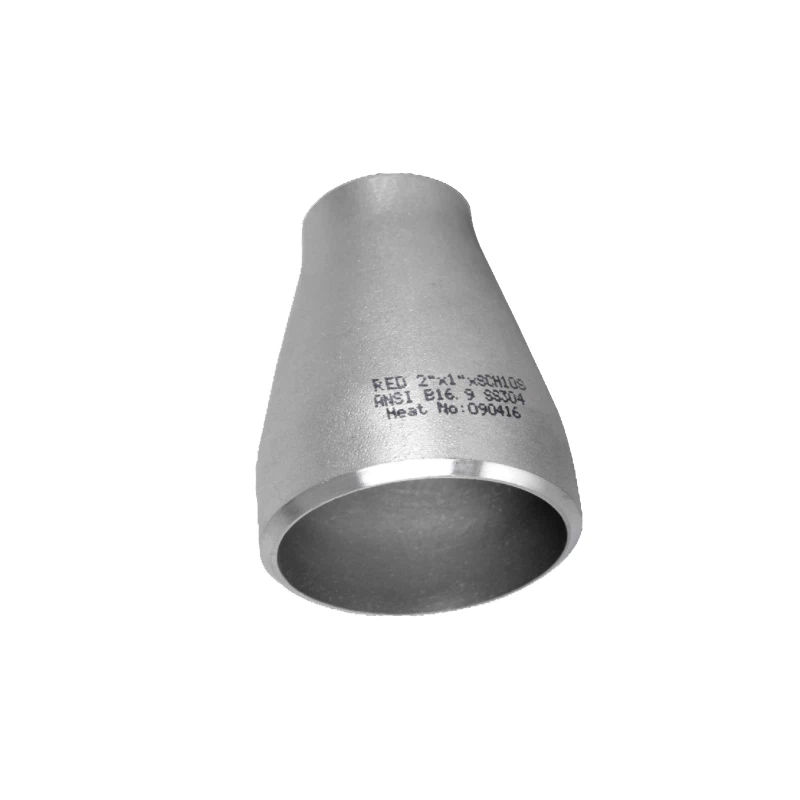
Pipe Fittings Reducer Packing & Delivery Details
Payment Modes: LC (Letter of Credit), TT (Telegraphic Transfer or Wire Transfer), Cheque, and others
Packaging: Pipe Fittings Reducer are packaged with caution and safety so they reach our client’s as good as they would expect. Packaging Charges Extra.
Tax: 18% GST
Our Factory
The company currently has 3 elbow pushing machines and various types of molds. Capable of producing 1/2 "-24" seamless and slotted elbows through push production, with 6 sets of tee forming machines capable of producing tees of various wall thicknesses from 1/2 "-24". 10 sets of various types of press machines to meet the production of different types of reducer and pipe caps.

Certifications


FAQ
As one of the leading reducer pipe fitting manufacturers and suppliers in China, we warmly welcome you to wholesale customized reducer pipe fitting made in China here and get pricelist from our factory. For price consultation, contact us.
-
![6000 LB Socket Weld Tee]() 6000 LB Socket Weld TeeA 6000 LB Socket Weld Tee is a forged high-pressure pipe fitting engineered to establish a 90-degree branch connectionread more
6000 LB Socket Weld TeeA 6000 LB Socket Weld Tee is a forged high-pressure pipe fitting engineered to establish a 90-degree branch connectionread more -
![ASTM A182 F316L Socket Weld Tee]() ASTM A182 F316L Socket Weld TeeAn ASTM A182 F316L Socket Weld Tee is a forged stainless steel pipe fitting engineered to establish a 90 degree branchread more
ASTM A182 F316L Socket Weld TeeAn ASTM A182 F316L Socket Weld Tee is a forged stainless steel pipe fitting engineered to establish a 90 degree branchread more -
![ASTM A182 F316 Socket Weld Tee]() ASTM A182 F316 Socket Weld TeeAn ASTM A182 F316 Socket Weld Tee is a forged stainless steel fitting engineered to create a 90-degree branchread more
ASTM A182 F316 Socket Weld TeeAn ASTM A182 F316 Socket Weld Tee is a forged stainless steel fitting engineered to create a 90-degree branchread more -
![ASTM A105 Socket Weld Reducing Tee]() ASTM A105 Socket Weld Reducing TeeAn ASTM A105 Socket Weld Reducing Tee is a forged carbon steel fitting designed to connect three pipes of differentread more
ASTM A105 Socket Weld Reducing TeeAn ASTM A105 Socket Weld Reducing Tee is a forged carbon steel fitting designed to connect three pipes of differentread more -
![ASTM A105 Socket Weld Equal Tee]() ASTM A105 Socket Weld Equal TeeAn ASTM A105 Socket Weld Equal Tee is a forged carbon steel pipe fitting designed to branch a piping run into tworead more
ASTM A105 Socket Weld Equal TeeAn ASTM A105 Socket Weld Equal Tee is a forged carbon steel pipe fitting designed to branch a piping run into tworead more -
![ASTM A105 Socket Weld Tee]() ASTM A105 Socket Weld TeeASTM A105 Socket Weld Tees are forged carbon steel fittings engineered to branch or combine fluid flow in small-bore,read more
ASTM A105 Socket Weld TeeASTM A105 Socket Weld Tees are forged carbon steel fittings engineered to branch or combine fluid flow in small-bore,read more


