


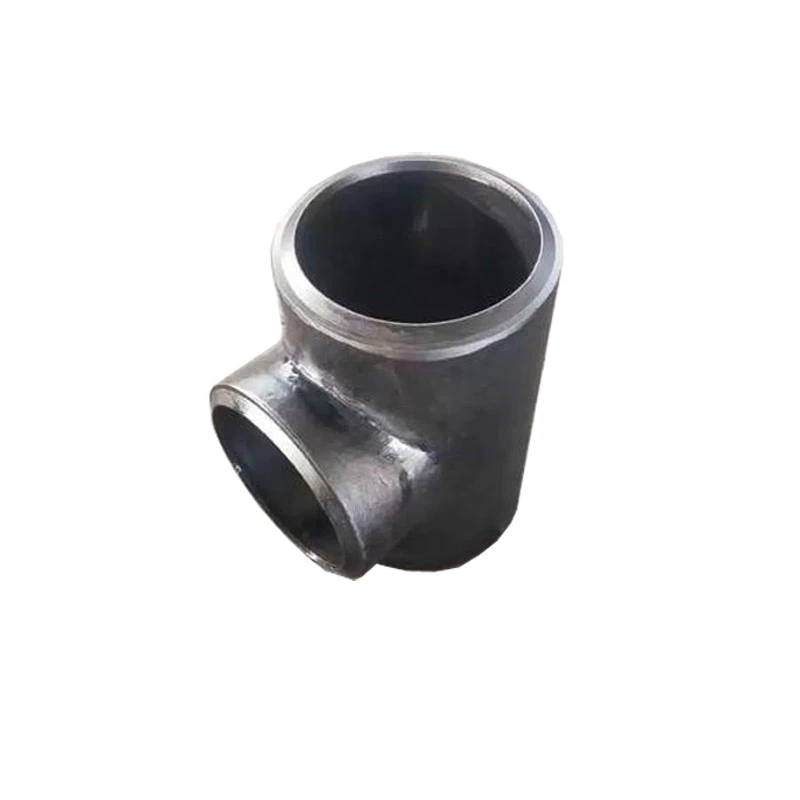
As a seasoned supplier of alloy steel tees, I've witnessed firsthand the intricate relationship between molybdenum content and the properties of these essential components. Alloy steel tees are crucial in various industries, from oil and gas to construction, and understanding how molybdenum influences their characteristics is vital for making informed decisions.
Impact on Strength and Hardness
Molybdenum is a powerful alloying element that significantly enhances the strength and hardness of alloy steel tees. When added to the steel matrix, molybdenum forms carbides, which are hard particles that resist deformation. These carbides act as barriers to the movement of dislocations within the steel, making it more difficult for the material to deform under stress. As a result, alloy steel tees with higher molybdenum content exhibit greater strength and hardness, making them suitable for applications where high mechanical loads are expected.
For example, in the oil and gas industry, alloy steel tees are often used in pipelines that transport high-pressure fluids. The high strength and hardness provided by molybdenum ensure that the tees can withstand the extreme pressures and forces encountered in these environments without failing. Similarly, in construction, alloy steel tees with high molybdenum content are used in structural applications where they need to support heavy loads and resist wear and tear.
Effects on Toughness and Ductility
While molybdenum enhances strength and hardness, it can also have an impact on the toughness and ductility of alloy steel tees. Toughness refers to the ability of a material to absorb energy and deform plastically before fracturing, while ductility is the ability of a material to be stretched or deformed without breaking.
In general, as the molybdenum content increases, the toughness and ductility of alloy steel tees tend to decrease. This is because the formation of carbides can lead to a more brittle microstructure, making the material more prone to cracking and fracturing under stress. However, the exact relationship between molybdenum content, toughness, and ductility depends on a variety of factors, including the overall composition of the steel, the heat treatment process, and the presence of other alloying elements.
To optimize the toughness and ductility of alloy steel tees, it is important to carefully balance the molybdenum content with other alloying elements and to use appropriate heat treatment techniques. For example, adding small amounts of nickel or chromium can improve the toughness of the steel, while proper heat treatment can help to refine the microstructure and reduce the brittleness associated with high molybdenum content.
Influence on Corrosion Resistance
Another important property affected by the molybdenum content in alloy steel tees is corrosion resistance. Molybdenum is known for its ability to enhance the corrosion resistance of steel by forming a protective oxide layer on the surface of the material. This oxide layer acts as a barrier, preventing the penetration of corrosive agents such as water, oxygen, and chemicals.
Alloy steel tees with higher molybdenum content are particularly resistant to pitting corrosion, which is a localized form of corrosion that can cause small holes or pits to form on the surface of the material. Pitting corrosion can be a serious problem in environments where the steel is exposed to chloride ions, such as in marine applications or in chemical processing plants. By increasing the molybdenum content, the resistance of the alloy steel tee to pitting corrosion can be significantly improved.
In addition to pitting corrosion, molybdenum also enhances the resistance of alloy steel tees to general corrosion, which is the uniform deterioration of the material over its entire surface. This makes alloy steel tees with high molybdenum content ideal for use in corrosive environments where long-term durability is required.
Impact on Weldability
Weldability is an important consideration when using alloy steel tees, as they often need to be joined to other components during installation. The molybdenum content can have a significant impact on the weldability of the steel, as it can affect the formation of the weld pool and the properties of the welded joint.
In general, as the molybdenum content increases, the weldability of alloy steel tees tends to decrease. This is because molybdenum can increase the hardenability of the steel, which means that it is more likely to form a hard and brittle microstructure in the heat-affected zone (HAZ) during welding. This can lead to cracking and other defects in the welded joint, reducing its strength and integrity.
To improve the weldability of alloy steel tees with high molybdenum content, it is important to use appropriate welding techniques and filler materials. For example, preheating the steel before welding can help to reduce the cooling rate in the HAZ and prevent the formation of a hard and brittle microstructure. Additionally, using filler materials with a similar composition to the base metal can help to ensure that the welded joint has similar properties to the rest of the tee.
Applications of Alloy Steel Tees with Different Molybdenum Content
The properties of alloy steel tees can be tailored to specific applications by adjusting the molybdenum content. Here are some examples of applications where alloy steel tees with different molybdenum content are commonly used:
- Low Molybdenum Content (Up to 0.5%): Alloy steel tees with low molybdenum content are often used in applications where moderate strength and corrosion resistance are required. These tees are commonly used in general engineering applications, such as plumbing and HVAC systems, where they need to withstand normal operating conditions.
- Medium Molybdenum Content (0.5% - 2%): Alloy steel tees with medium molybdenum content offer a good balance of strength, toughness, and corrosion resistance. They are commonly used in applications where higher mechanical loads and more corrosive environments are encountered, such as in the automotive and aerospace industries.
- High Molybdenum Content (Above 2%): Alloy steel tees with high molybdenum content are used in applications where extreme strength, hardness, and corrosion resistance are required. These tees are commonly used in the oil and gas industry, chemical processing plants, and other high-performance applications where they need to withstand harsh conditions.
Conclusion
In conclusion, the molybdenum content has a profound impact on the properties of alloy steel tees, including strength, hardness, toughness, ductility, corrosion resistance, and weldability. By carefully controlling the molybdenum content and other alloying elements, it is possible to tailor the properties of alloy steel tees to meet the specific requirements of different applications.
As a supplier of alloy steel tees, I understand the importance of providing high-quality products that meet the needs of my customers. Whether you are looking for a Black Iron Tee for a plumbing project, a Gas Line Tee Fitting for a gas distribution system, or a 1 Inch Tee Fitting for a specific application, I can help you find the right alloy steel tee with the appropriate molybdenum content to ensure optimal performance.
If you have any questions or need further information about alloy steel tees or the impact of molybdenum content on their properties, please don't hesitate to contact me. I am always happy to assist you in making the best choice for your project.

References
- ASM Handbook, Volume 1: Properties and Selection: Irons, Steels, and High-Performance Alloys. ASM International, 1990.
- Steelmaking and Refining Volume: 2 of the ASM Handbook. ASM International, 1998.
- Corrosion Resistance of Stainless Steels. ASM International, 2003.


