Alloy steel tees are crucial components in various industrial applications, known for their durability, strength, and resistance to corrosion. As a leading supplier of alloy steel tees, I understand the importance of meeting high - quality standards to ensure the safety and efficiency of our customers' projects. In this blog, I will discuss the key standards for alloy steel tees and how they impact their performance and suitability for different uses.


Material Composition
The first and most fundamental standard for alloy steel tees is the material composition. Alloy steels are made by combining iron with other elements, such as chromium, nickel, manganese, molybdenum, and vanadium. These alloying elements are added in specific proportions to enhance the steel's properties, such as hardness, strength, toughness, and corrosion resistance.
For instance, chrome - moly alloy steel, which contains chromium and molybdenum, is widely used in high - temperature applications because of its excellent heat resistance. Stainless steel, another common alloy, contains chromium and nickel, providing high corrosion resistance, making it suitable for applications in harsh environments, like chemical processing plants and marine settings.
As a supplier, we ensure that our alloy steel tees are made from high - quality alloys that meet the industry - recognized standards for material composition. We source our materials from reputable mills and conduct strict quality control checks to verify the chemical composition of each batch of tees.
Dimensional Accuracy
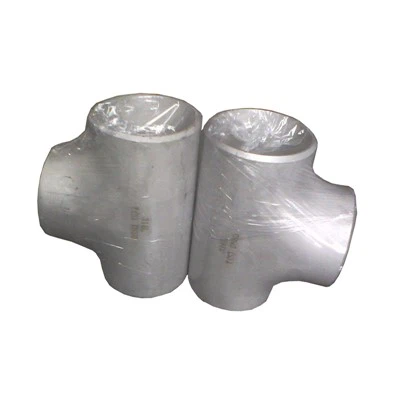
Dimensional accuracy is another critical standard for alloy steel tees. Precise dimensions are essential to ensure that the tees fit properly into the piping systems and provide a leak - free connection. The internal and external diameters, wall thickness, and branch angles of the tees must be within the specified tolerances.
Industry standards, such as the American National Standards Institute (ANSI) and the American Society of Mechanical Engineers (ASME), define the dimensional requirements for various types and sizes of alloy steel tees. For example, ASME B16.9 specifies the dimensions of wrought steel buttweld fittings, including tees. Our manufacturing processes are designed to meet or exceed these standards. We use advanced machining and forming techniques to ensure that each tee is produced with high precision. After production, we perform thorough dimensional inspections using calibrated measuring tools to guarantee compliance with the required specifications.
Pressure Rating
The pressure rating of an alloy steel tee is a measure of its ability to withstand internal pressure without leaking or failing. This is a vital standard, especially in applications where high pressures are involved, such as in oil and gas pipelines, power plants, and hydraulic systems.
The pressure rating of a tee depends on several factors, including its material composition, wall thickness, and manufacturing process. Industry standards, such as the ANSI/ASME B16.5 for pipe flanges and flanged fittings, provide guidelines for determining the pressure - temperature ratings of different types of fittings.
As a supplier, we ensure that our alloy steel tees are designed and manufactured to have appropriate pressure ratings for their intended applications. We conduct pressure testing on our tees to verify their performance under specified pressure conditions. This testing helps us to identify any potential weaknesses in the tees and make necessary adjustments to ensure their safety and reliability.
Weldability
In many applications, alloy steel tees need to be welded to other components of the piping system. Therefore, weldability is an important standard. Good weldability means that the tee can be welded without significant cracking, porosity, or other weld - related defects.
The weldability of an alloy steel tee depends on its material composition, especially the carbon equivalent (CE) value. A lower CE value generally indicates better weldability. We select alloy steels with appropriate CE values and provide welding procedures and guidelines to our customers to ensure successful welding operations. Our technical support team is also available to assist customers with any welding - related questions or issues.
Surface Finish
The surface finish of an alloy steel tee can impact its corrosion resistance and appearance. A smooth and clean surface finish reduces the risk of corrosion by minimizing the areas where dirt, moisture, and corrosive substances can accumulate.
We offer alloy steel tees with different surface finishes to meet the diverse needs of our customers. For example, a bare or mill - finish tee is suitable for general applications, while a galvanized or painted finish can provide additional protection against corrosion. Our surface treatment processes are carried out in accordance with industry best practices to ensure a high - quality finish.
Application - Specific Standards
In addition to the general standards mentioned above, there are also application - specific standards for alloy steel tees. For example, in the Black Pipe Tee used in plumbing and water supply systems, the tees must meet the standards for potable water safety. They should not release any harmful substances into the water.
Black Iron Tee used in gas distribution systems need to comply with strict safety standards to prevent gas leaks. These tees must be able to withstand the specific pressures and environmental conditions of the gas lines.
Gas Line Tee Fitting also has its own set of standards regarding material compatibility with the gas being transported, such as natural gas or propane.
As a supplier, we are well - aware of these application - specific standards and ensure that our products meet all the relevant requirements. We work closely with our customers to understand their specific needs and provide them with the most suitable alloy steel tees.
Quality Assurance and Certification
To demonstrate our commitment to meeting the highest standards, we have a comprehensive quality assurance system in place. Our manufacturing processes are certified to international standards, such as ISO 9001, which ensures that we have a systematic approach to quality management.
We also provide certification documents for our alloy steel tees, including material test reports, dimensional inspection reports, and pressure test certificates. These documents give our customers confidence in the quality and performance of our products.
Conclusion
In conclusion, the standards for alloy steel tees cover a wide range of aspects, including material composition, dimensional accuracy, pressure rating, weldability, surface finish, and application - specific requirements. As a supplier, we are dedicated to producing high - quality alloy steel tees that meet or exceed all these standards.
If you are in the market for alloy steel tees for your project, whether it's for a small - scale plumbing job or a large - scale industrial application, we are here to provide you with the best products and services. We have a wide range of alloy steel tees in different sizes, materials, and finishes to meet your specific needs. Contact us for a detailed discussion about your requirements and a competitive quote. We look forward to working with you and contributing to the success of your projects.
References
- American National Standards Institute (ANSI). Various standards related to pipe fittings.
- American Society of Mechanical Engineers (ASME). Standards such as B16.9 and B16.5.
- ISO 9001:2015 Quality management systems - Requirements.