Are SW Flanges Easy to Disassemble?


As a supplier of SW (Socket Weld) flanges, I've encountered numerous inquiries from customers regarding the ease of disassembling these flanges. In this blog post, I'll delve into the factors that influence the disassembly process of SW flanges and share my insights based on years of experience in the industry.
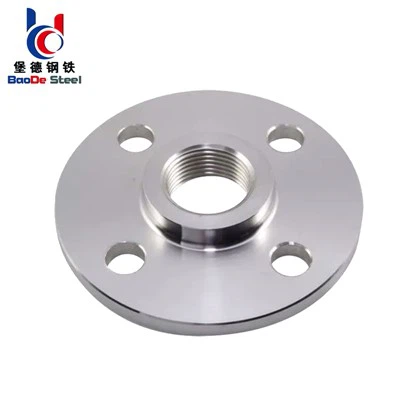
To begin with, let's understand what SW flanges are. Socket weld flanges are a type of pipe flange that is welded to the pipe using a socket joint. This design provides a strong and reliable connection, making them suitable for high-pressure and high-temperature applications. They are commonly used in industries such as oil and gas, chemical processing, and power generation.
One of the primary factors that determine the ease of disassembling SW flanges is the welding process. Socket weld flanges are typically welded using the Gas Tungsten Arc Welding (GTAW) or Shielded Metal Arc Welding (SMAW) methods. When the welding is done correctly, the joint between the flange and the pipe is extremely strong. However, this also means that disassembling the flange can be a challenging task.
In a well - executed socket weld, the filler metal fuses with the base metal of the flange and the pipe, creating a solid bond. To disassemble the flange, this welded joint needs to be broken. One common method is to use cutting tools such as a plasma cutter or a cutting torch. These tools can effectively sever the welded connection, but they require skill and precision to avoid damaging the flange or the pipe.
Another factor to consider is the condition of the flange and the pipe. If the flange and the pipe have been exposed to harsh environmental conditions, such as corrosion or erosion, the disassembly process can become even more difficult. Corrosion can cause the welded joint to become brittle or can create additional layers of material that need to be removed. In such cases, it may be necessary to use additional techniques, such as grinding or sandblasting, to clean the surface before attempting to cut the welded joint.
The size of the SW flange also plays a role in the disassembly process. Larger flanges generally have more welding area, which means more material needs to be cut through. This can increase the time and effort required for disassembly. For example, a 1 Inch Socket Welded Flange will be relatively easier to disassemble compared to a larger - sized flange because of its smaller welding area.
However, it's important to note that with the right tools and expertise, SW flanges can be disassembled. Professional welders and technicians who are experienced in working with socket weld flanges understand the nuances of the disassembly process. They know how to select the appropriate cutting tools, how to control the cutting process to minimize damage, and how to handle any unexpected challenges that may arise.
In some cases, if the disassembly is part of a maintenance or repair operation, it may be possible to avoid completely disassembling the flange. For instance, if only a minor repair is needed, the technician may be able to access the area of concern without removing the flange entirely. This can save time and resources.
Now, let's talk about the importance of proper installation when it comes to future disassembly. If SW flanges are installed correctly in the first place, it can make the disassembly process a bit more straightforward. During installation, it's crucial to follow the manufacturer's guidelines for welding parameters, such as the type of filler metal, welding current, and pre - heating requirements. A well - installed flange will have a more uniform and predictable welded joint, which is easier to break when the time for disassembly comes.
As a supplier of Socket Weld Flanges, I understand the needs of my customers. Whether you're looking for flanges for a new project or need advice on the installation and disassembly of existing flanges, I'm here to help. Our flanges are made from high - quality materials and are manufactured to meet industry standards. We also offer technical support to ensure that you get the most out of our products.
If you're in the market for SW flanges or have any questions regarding their installation, use, or disassembly, I encourage you to reach out to me. I can provide you with detailed information about our product range, pricing, and delivery options. Whether you're a small - scale operation or a large industrial company, I'm committed to providing you with the best possible service.
In conclusion, while SW flanges are not the easiest to disassemble due to their welded connections, it is certainly achievable with the right approach. By understanding the factors that affect the disassembly process, using the appropriate tools, and having skilled technicians, you can successfully disassemble SW flanges when needed. And if you're in the process of sourcing SW flanges, I invite you to consider our products. We have the expertise and the quality products to meet your requirements.
References
- Welding Handbook, American Welding Society
- Pipe Flanges and Fittings Standards Handbook, McGraw - Hill