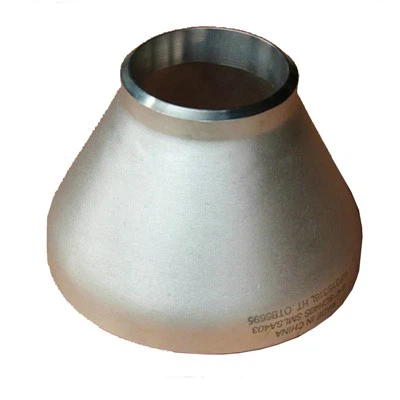
When it comes to industrial pipe systems, reducers play a crucial role in ensuring the smooth and efficient flow of fluids or gases. A 4 To 2 Inch Reducer, in particular, is a commonly used component that helps in transitioning between different pipe sizes. As a supplier of these reducers, I often get asked about the cost. In this blog, I'll delve into the factors that influence the price of a 4 To 2 Inch Reducer and provide some insights to help you understand the cost dynamics.
Factors Affecting the Cost of a 4 To 2 Inch Reducer
Material
The material used to manufacture the reducer is one of the most significant factors affecting its cost. Reducers can be made from a variety of materials, including carbon steel, stainless steel, alloy steel, and even plastic. Each material has its own unique properties, advantages, and cost implications.
- Carbon Steel: Carbon steel reducers are relatively inexpensive compared to other materials. They are widely used in general industrial applications where corrosion resistance is not a major concern. Carbon steel is strong and durable, making it suitable for high-pressure and high-temperature environments.
- Stainless Steel: Stainless steel reducers are more expensive than carbon steel due to their superior corrosion resistance. They are commonly used in industries such as food processing, pharmaceuticals, and chemical processing, where hygiene and corrosion resistance are critical. Stainless steel is also aesthetically pleasing, making it a popular choice for applications where appearance matters.
- Alloy Steel: Alloy steel reducers are made by adding various alloying elements to carbon steel to enhance its properties. They are more expensive than carbon steel but offer better strength, toughness, and corrosion resistance. Alloy steel reducers are often used in high-stress applications such as oil and gas pipelines and power generation plants.
- Plastic: Plastic reducers are the least expensive option. They are lightweight, easy to install, and resistant to corrosion. However, they have lower strength and temperature resistance compared to metal reducers. Plastic reducers are commonly used in low-pressure and low-temperature applications such as residential plumbing and irrigation systems.
Manufacturing Process
The manufacturing process used to produce the reducer also affects its cost. There are several methods of manufacturing reducers, including forging, casting, and welding.
- Forging: Forged reducers are made by heating a metal billet and then shaping it using a hammer or press. This process results in a high-quality, dense, and homogeneous product with excellent mechanical properties. Forged reducers are more expensive than cast or welded reducers due to the high cost of the forging equipment and the labor-intensive nature of the process.
- Casting: Cast reducers are made by pouring molten metal into a mold and allowing it to solidify. This process is relatively inexpensive and can produce complex shapes with high precision. However, cast reducers may have some internal defects such as porosity and inclusions, which can affect their mechanical properties.
- Welding: Welded reducers are made by joining two or more pieces of metal using welding techniques. This process is less expensive than forging or casting and can be used to produce large-sized reducers. However, welded reducers may have some weaknesses at the weld joints, which can reduce their strength and durability.
Size and Wall Thickness
The size and wall thickness of the reducer also play a role in determining its cost. Larger reducers and those with thicker walls generally cost more than smaller and thinner-walled reducers. This is because larger and thicker-walled reducers require more material and more complex manufacturing processes.
Quantity
The quantity of reducers you order can also affect the price. Generally, the more reducers you order, the lower the unit cost. This is because suppliers can offer volume discounts to customers who purchase large quantities of products. If you are planning to purchase a large number of 4 To 2 Inch Reducers, it is advisable to negotiate with your supplier for a better price.
Price Range of a 4 To 2 Inch Reducer
The cost of a 4 To 2 Inch Reducer can vary widely depending on the factors mentioned above. On average, a carbon steel 4 To 2 Inch Reducer may cost anywhere from $10 to $50, while a stainless steel or alloy steel reducer can cost between $50 and $200. Plastic reducers are the least expensive, with prices ranging from $5 to $20.
It's important to note that these are just rough estimates, and the actual price may vary depending on the specific requirements of your project, the supplier you choose, and the current market conditions.
Comparing with Other Reducers
In addition to the 4 To 2 Inch Reducer, there are other common sizes of reducers available in the market, such as the 6 Inch To 4 Inch Pipe Reducer and the DN50mm Pipe Reducer. The cost of these reducers also depends on the same factors as the 4 To 2 Inch Reducer. Generally, larger reducers tend to be more expensive than smaller ones, but this can vary depending on the material and manufacturing process.
Why Choose Our 4 To 2 Inch Reducers
As a supplier of 4 To 2 Inch Reducers, we take pride in offering high-quality products at competitive prices. Our reducers are made from the finest materials and are manufactured using the latest technology and processes to ensure superior performance and durability.
We also offer a wide range of customization options to meet the specific needs of our customers. Whether you need a reducer with a special size, wall thickness, or material, we can work with you to create a solution that fits your requirements.


In addition to our high-quality products, we also provide excellent customer service. Our team of experts is always available to answer your questions and provide you with technical support. We strive to ensure that our customers are satisfied with their purchase and that their projects are completed on time and within budget.
Contact Us for Procurement
If you are interested in purchasing 4 To 2 Inch Reducers or have any questions about our products, please don't hesitate to contact us. We would be happy to provide you with a quote and discuss your specific requirements. Our team is dedicated to helping you find the best solution for your project, and we look forward to working with you.
References
- ASME B16.9 - Factory-Made Wrought Steel Buttwelding Fittings
- ASTM A234 - Standard Specification for Piping Fittings of Wrought Carbon Steel and Alloy Steel for Moderate and High-Temperature Service
- ASTM A403 - Standard Specification for Wrought Austenitic Stainless Steel Piping Fittings