Optimizing the flow distribution in a stainless steel tee is a critical aspect for many industrial applications. As a reliable stainless steel tee supplier, we understand the importance of ensuring efficient and uniform flow through these fittings. In this blog, we will explore various methods and considerations to achieve optimal flow distribution in stainless steel tees.
Understanding the Basics of Flow in Stainless Steel Tees
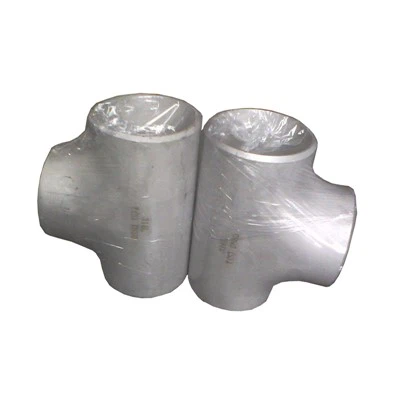
Before delving into optimization techniques, it's essential to understand how fluid flows through a stainless steel tee. A tee is a pipe fitting that allows a fluid to flow from one pipe into two or more pipes at a right - angle or other specified angles. When fluid enters the main pipe of the tee and encounters the branch, complex flow patterns are formed. These patterns can lead to uneven flow distribution, pressure drops, and turbulence, which may negatively impact the overall performance of the piping system.
The flow behavior in a tee is influenced by several factors, including the flow rate, fluid properties (such as viscosity and density), the geometry of the tee (diameter, wall thickness, and the angle of the branch), and the Reynolds number. The Reynolds number, which is a dimensionless quantity, helps to predict the flow regime (laminar or turbulent). In laminar flow, the fluid moves in smooth layers, while in turbulent flow, there is chaotic mixing and eddy formation.

Factors Affecting Flow Distribution
1. Tee Geometry
The geometry of the stainless steel tee plays a crucial role in flow distribution. The diameter ratio between the main pipe and the branch, as well as the angle of the branch, can significantly affect how the fluid divides. For example, a tee with a large - diameter branch relative to the main pipe may cause a higher proportion of the fluid to flow into the branch, while a small - diameter branch may result in most of the fluid continuing through the main pipe.
2. Flow Rate
The flow rate of the fluid is another important factor. At low flow rates, the flow may be more laminar, and the distribution may be more predictable. However, as the flow rate increases, the flow becomes more turbulent, and it becomes more challenging to achieve uniform flow distribution.
3. Fluid Properties
Fluid properties such as viscosity and density also impact flow distribution. High - viscosity fluids tend to have more resistance to flow and may require different optimization strategies compared to low - viscosity fluids.
Optimization Methods
1. Design Modifications
One of the most effective ways to optimize flow distribution is through design modifications. For instance, using a reducing tee can help balance the flow between the main pipe and the branch. A reducing tee has a smaller diameter in the branch compared to the main pipe, which can control the amount of fluid flowing into the branch.
Another design option is to use a multi - port tee or a tee with an integrated flow - control device. These specialized tees can be engineered to provide more precise flow distribution based on the specific requirements of the application.
2. Computational Fluid Dynamics (CFD) Analysis
Computational Fluid Dynamics (CFD) is a powerful tool for analyzing and optimizing flow in stainless steel tees. CFD simulations can provide detailed information about the flow patterns, pressure distribution, and velocity profiles within the tee. By using CFD, engineers can test different design concepts and operating conditions virtually before manufacturing the actual tee. This can save time and cost by identifying potential flow problems early in the design process.
3. Installation Considerations
Proper installation of the stainless steel tee is also essential for optimal flow distribution. The tee should be installed in a straight section of the pipe, away from any bends, valves, or other fittings that may disrupt the flow. Additionally, the pipe connections should be properly aligned and sealed to prevent leakage and ensure a smooth flow path.
Application - Specific Considerations
1. Chemical Processing
In chemical processing plants, stainless steel tees are used to distribute various chemicals throughout the system. The optimization of flow distribution is crucial to ensure accurate mixing and reaction rates. For example, in a chemical reactor feed system, a well - optimized tee can ensure that the reactants are evenly distributed, leading to more efficient chemical reactions.
2. Water Treatment
In water treatment plants, stainless steel tees are used to distribute water for filtration, disinfection, and other processes. Optimizing the flow distribution can help to ensure that all parts of the treatment equipment receive an adequate supply of water, improving the overall efficiency of the treatment process.
3. HVAC Systems
In heating, ventilation, and air - conditioning (HVAC) systems, stainless steel tees are used to distribute air or refrigerant. Proper flow distribution is necessary to maintain consistent temperature and humidity levels throughout the building. By optimizing the flow in the tees, HVAC systems can operate more efficiently, reducing energy consumption.
Our Product Range
As a leading stainless steel tee supplier, we offer a wide range of products to meet the diverse needs of our customers. Our 2 Inch Stainless Steel Tee is suitable for medium - sized piping systems, providing reliable flow distribution. For smaller applications, our 1 Inch Stainless Steel Tee offers a compact and efficient solution. And for applications that require high corrosion resistance, our 316L Stainless Steel Tee is an excellent choice.
Conclusion
Optimizing the flow distribution in a stainless steel tee is a complex but essential task for many industrial applications. By understanding the factors that affect flow, using appropriate optimization methods, and considering the specific requirements of the application, we can ensure that our stainless steel tees provide efficient and reliable flow distribution.
If you are interested in our stainless steel tee products or need more information on flow optimization, please feel free to contact us for procurement and further discussion. We are committed to providing high - quality products and professional technical support to meet your needs.

References
- White, F. M. (2006). Fluid Mechanics. McGraw - Hill.
- Patankar, S. V. (1980). Numerical Heat Transfer and Fluid Flow. Hemisphere Publishing Corporation.
- Incropera, F. P., & DeWitt, D. P. (2002). Fundamentals of Heat and Mass Transfer. Wiley.