Hey there! As a supplier of Butt Welded Reducers, I often get asked about the mechanical properties of these essential pipe fittings. So, let's dive right in and explore what makes these reducers tick.
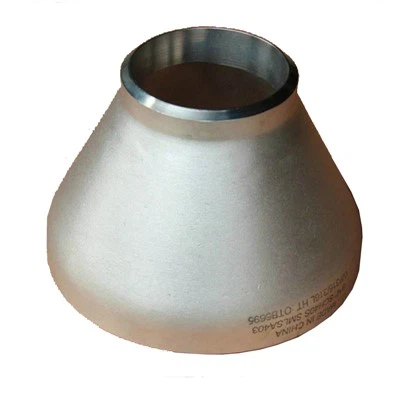
First off, let's understand what a Butt Welded Reducer is. It's a type of pipe fitting that's used to connect two pipes of different diameters. The "butt weld" part means that it's welded directly to the pipes, creating a strong and leak - proof connection. These reducers are widely used in various industries, from oil and gas to water treatment.
Strength and Durability
One of the most important mechanical properties of butt welded reducers is their strength. They need to withstand high pressures and forces without failing. The strength of a reducer depends on several factors, including the material it's made from and its manufacturing process.
Most of the Carbon Steel Reducer Fittings we supply are made from high - quality carbon steel. Carbon steel is known for its excellent strength and durability. It can handle a wide range of temperatures and pressures, making it suitable for many applications. For example, in an oil pipeline, the reducer needs to be able to withstand the high pressure of the flowing oil. If the reducer isn't strong enough, it could lead to leaks or even pipe failures, which can be extremely costly and dangerous.
The manufacturing process also plays a crucial role in determining the strength of the reducer. Our reducers are made using advanced welding techniques. This ensures that the welds are strong and uniform, which in turn enhances the overall strength of the fitting. When the welding is done correctly, the reducer can perform well under stress and last for a long time.
Ductility
Ductility is another important mechanical property. It refers to the ability of a material to deform plastically before breaking. In the case of butt welded reducers, ductility is essential because it allows the fitting to withstand some degree of bending or stretching without cracking.
Carbon steel reducers generally have good ductility. This means that during installation or when there are minor movements in the pipeline system, the reducer can adjust without failing. For instance, if there's a small ground movement near a pipeline, a ductile reducer can absorb the stress and prevent the pipes from separating or cracking.
Corrosion Resistance
Corrosion can be a major problem in pipeline systems, especially in harsh environments. That's why corrosion resistance is a key mechanical property for butt welded reducers.


Our carbon steel reducers can be treated to enhance their corrosion resistance. For example, some of our MSS SP 75 Butt Welded Concentric Reducer With Black Painting are painted with a special coating. This coating acts as a barrier between the steel and the surrounding environment, protecting it from rust and other forms of corrosion.
In addition to painting, we also offer reducers made from corrosion - resistant alloys. These alloys are designed to resist the effects of chemicals, moisture, and other corrosive agents. In industries such as chemical processing, where the pipes are exposed to highly corrosive substances, using corrosion - resistant reducers is a must.
Hardness
Hardness is related to a material's ability to resist wear and abrasion. In a pipeline system, the fluid flowing through the pipes can carry particles that can cause abrasion on the inner surface of the reducer. A hard reducer can better withstand this wear and tear.
Carbon steel can be heat - treated to increase its hardness. By carefully controlling the heat - treatment process, we can ensure that the reducer has the right balance of hardness and ductility. A reducer that's too hard may become brittle and prone to cracking, while one that's too soft won't resist abrasion well.
Fatigue Resistance
Pipelines are often subject to cyclic loading, which means the pressure and forces on the pipes change over time. This can lead to fatigue, which is the gradual weakening of the material due to repeated stress.
Butt welded reducers need to have good fatigue resistance. Our reducers are designed and manufactured to withstand cyclic loading. The quality of the welds and the material used play important roles in fatigue resistance. A well - made reducer with high - quality welds can handle many cycles of stress without failing.
Impact Resistance
In some applications, the pipeline system may be subject to impact forces. For example, in an industrial setting, there could be accidental impacts from machinery or other equipment.
Our butt welded reducers are engineered to have good impact resistance. The ductility and strength of the carbon steel help the reducer absorb the impact energy without breaking. This ensures the integrity of the pipeline system even in the face of unexpected impacts.
Thermal Expansion and Contraction
Pipelines can experience temperature changes, which cause the pipes to expand and contract. Butt welded reducers need to be able to accommodate these changes without causing problems in the pipeline system.
Carbon steel has a relatively predictable coefficient of thermal expansion. This means that we can design the reducers to account for the expected temperature variations. By leaving enough room for expansion and contraction, we can prevent the pipes from buckling or the welds from cracking due to thermal stress.
Conclusion
In conclusion, the mechanical properties of butt welded reducers are crucial for their performance in pipeline systems. From strength and durability to corrosion resistance and thermal expansion, each property plays a vital role in ensuring the safe and efficient operation of the pipes.
If you're in the market for high - quality butt welded reducers, we're here to help. Whether you need a standard size or a custom - made reducer, we can provide you with the right solution. Contact us to start a conversation about your specific requirements and let's work together to find the perfect fitting for your project.
References
- ASME B16.9: Factory - Made Wrought Steel Buttwelding Fittings
- ASTM A234: Standard Specification for Piping Fittings of Wrought Carbon Steel and Alloy Steel for Moderate and High - Temperature Service
- MSS SP - 75: High - Test Wrought Buttwelding Fittings