Hey there! As a threaded flange supplier, I often get asked about how to connect a pipe to a threaded flange. It's a common task in many industrial and plumbing projects, and getting it right is super important for a leak - free and long - lasting connection. So, let's dive right into it!
1. Gather Your Tools and Materials
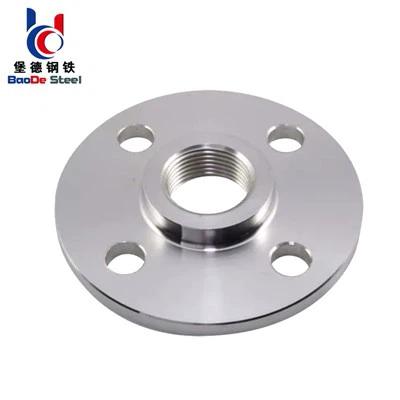
First things first, you gotta make sure you have all the stuff you need. You'll obviously need the threaded flange itself. We offer a great range of Threaded Welded Flange that are high - quality and built to last.
Besides the flange, you'll need a pipe that matches the size and thread type of the flange. Check the specifications carefully to ensure a proper fit. You'll also need some tools like a pipe wrench. This is crucial for tightening the pipe onto the flange. A thread sealant is another must - have. It helps prevent leaks by filling in the gaps between the threads.
2. Prepare the Pipe and Flange
Before you start connecting anything, take a close look at the pipe and the flange. Inspect the threads on both the pipe and the flange. Make sure there are no nicks, burrs, or damage. If you find any rough spots, you can use a file to smooth them out.
Next, clean the threads. Any dirt, debris, or rust on the threads can prevent a tight connection. You can use a wire brush to clean the threads thoroughly. Once they're clean, dry them off completely.
3. Apply the Thread Sealant
Now it's time to apply the thread sealant. There are different types of thread sealants available, like Teflon tape or pipe dope. If you're using Teflon tape, start at the end of the pipe threads. Wrap the tape around the threads in a clockwise direction. Make sure to overlap the tape slightly with each turn. Usually, 3 - 5 wraps are enough, but it can vary depending on the size of the pipe.
If you're using pipe dope, squeeze a small amount onto the threads of the pipe. Spread it evenly over the threads using a brush or your finger. Just be careful not to get it all over your hands!
4. Connect the Pipe to the Flange
Once the sealant is applied, it's time to start screwing the pipe into the flange. Hold the flange firmly in place and start turning the pipe clockwise. You should feel some resistance as the threads start to engage. Don't force it too hard at first; just turn it slowly and steadily.
As you turn the pipe, make sure it's going straight into the flange. If it starts to go in at an angle, stop and correct it. A misaligned connection can lead to leaks and other problems down the road.
5. Tighten the Connection
After the pipe is screwed in a few turns, it's time to use the pipe wrench. Place the jaws of the wrench around the pipe near the flange. Make sure the wrench is positioned correctly so it doesn't slip.
Start tightening the pipe by turning the wrench clockwise. Keep turning until the connection is tight. But be careful not to over - tighten it. Over - tightening can damage the threads and cause the flange or the pipe to crack. You should feel a good amount of resistance when it's tight enough.
6. Check for Leaks
Once the connection is tightened, it's important to check for leaks. You can do this by pressurizing the system if it's a fluid - carrying pipe. If it's a gas pipe, you can use a leak detector solution. Apply the solution to the connection. If there are any bubbles forming, it means there's a leak.
If you find a leak, don't panic. You can try tightening the connection a little more carefully. If that doesn't work, you may need to remove the pipe, re - apply the sealant, and try again.
7. Final Inspection
After you've confirmed that there are no leaks, do a final inspection of the connection. Check that the pipe is straight and that the flange is properly aligned. Make sure there are no signs of damage or stress on the flange or the pipe.
Now, I know this might seem like a lot of steps, but with a little practice, connecting a pipe to a threaded flange becomes a breeze. And remember, if you're looking for top - notch threaded flanges, we've got you covered. We offer a wide variety of sizes and types to meet your specific needs.


If you're planning a project and need to source threaded flanges, we'd love to talk to you. Whether you're a small - scale DIYer or a large - scale industrial contractor, we can provide you with the right products at a great price. Just reach out to us for a quote and let's start a conversation about your requirements.
References
- "Pipe Fitting Handbook" - A comprehensive guide on pipe fittings and connections.
- Industry standards and guidelines for threaded flange connections.