Hey there! As a supplier of alloy steel elbows, I often get asked about the precision requirements for these essential components. Alloy steel elbows are used in a wide range of industries, from oil and gas to power generation, and getting the precision right is crucial for ensuring optimal performance and safety. In this blog post, I'll break down the key precision requirements for alloy steel elbows and explain why they matter.
Dimensional Precision
One of the most important aspects of alloy steel elbow precision is dimensional accuracy. The dimensions of an elbow, including its diameter, wall thickness, and center-to-end dimensions, need to meet specific standards to ensure proper fit and function. For example, if an elbow's diameter is too large or too small, it may not fit properly with other pipes or fittings in the system, leading to leaks or reduced flow efficiency.
The center-to-end dimensions of an elbow are also critical, especially in applications where space is limited. These dimensions determine how the elbow will be positioned within the piping system, and any deviation from the specified values can cause alignment issues and make installation more difficult.
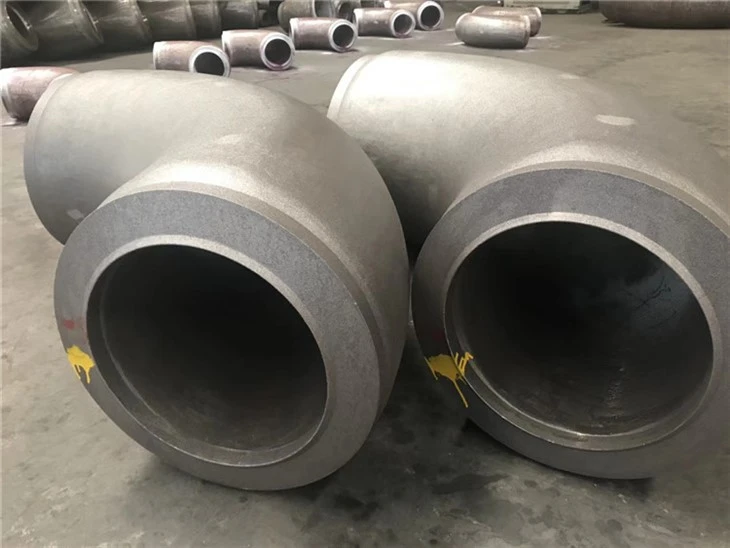
In the industry, dimensional precision is typically specified according to standards such as ASTM (American Society for Testing and Materials). For instance, the ASTM A335 P91 Alloy Steel 90 Degree LR Pipe Fittings must adhere to strict dimensional tolerances to ensure compatibility with other components in high-temperature and high-pressure applications.
Angle Precision
Another key precision requirement for alloy steel elbows is the accuracy of the bend angle. Elbows come in various angles, such as 45 degrees and 90 degrees, and the actual bend angle must closely match the specified value. Even a small deviation in the bend angle can have a significant impact on the flow characteristics of the piping system.
For example, in a 90-degree elbow, if the angle is slightly off, it can cause turbulence in the fluid flow, leading to increased pressure drop and energy loss. This not only affects the efficiency of the system but can also cause premature wear and tear on the pipes and fittings.
Similarly, in a Steel 45 Degree Elbow, the precise angle is essential for proper alignment and smooth flow transition. Manufacturers use advanced bending techniques and quality control measures to ensure that the bend angles of alloy steel elbows are within the specified tolerances.
Surface Finish Precision
The surface finish of an alloy steel elbow is also an important consideration. A smooth surface finish helps to reduce friction and prevent the accumulation of debris and corrosion within the pipe. This is particularly important in applications where the fluid being transported is prone to scaling or corrosion.
The surface finish is typically measured in terms of roughness average (Ra). A lower Ra value indicates a smoother surface. In many industries, a specific Ra value is specified for alloy steel elbows to ensure optimal performance. For example, in the food and beverage industry, a very smooth surface finish is required to prevent the growth of bacteria and ensure product quality.
Manufacturers use various methods to achieve the desired surface finish, such as machining, grinding, and polishing. Quality control checks are also performed to ensure that the surface finish meets the specified requirements.
Material Composition Precision
The precision of the material composition is fundamental to the performance of alloy steel elbows. Alloy steel is a combination of iron and other elements, such as chromium, nickel, and molybdenum, which are added to enhance its strength, corrosion resistance, and other properties.
The exact composition of the alloy steel must be carefully controlled to meet the specific requirements of the application. For example, in high-temperature applications, an alloy steel with a higher chromium content may be required to provide better oxidation resistance.
Any deviation in the material composition can lead to variations in the mechanical properties of the elbow, such as strength, hardness, and ductility. This can compromise the integrity of the piping system and increase the risk of failure.

To ensure material composition precision, manufacturers use advanced metallurgical techniques and quality control processes. They conduct chemical analysis tests on the raw materials and finished products to verify that the composition meets the specified standards.
Wall Thickness Uniformity
Uniform wall thickness is crucial for the structural integrity of alloy steel elbows. A non-uniform wall thickness can create weak points in the elbow, which may lead to premature failure under pressure.
During the manufacturing process, various factors can affect the wall thickness uniformity, such as the bending process and the quality of the raw materials. Manufacturers use advanced manufacturing techniques and quality control measures to ensure that the wall thickness of the elbow is consistent throughout.
For example, in the production of Short Bend Elbow, special attention is paid to maintaining uniform wall thickness, as these elbows are often subjected to high stress due to their shorter radius.
Why Precision Matters
You might be wondering why all these precision requirements are so important. Well, here are a few reasons:
- Safety: Precision ensures that alloy steel elbows can withstand the pressures and stresses of the application without failing. This is crucial for preventing leaks, explosions, and other safety hazards in industries such as oil and gas and chemical processing.
- Efficiency: Precise dimensions, angles, and surface finishes help to optimize the flow of fluids through the piping system, reducing energy consumption and improving overall efficiency.
- Compatibility: Meeting the precision requirements ensures that alloy steel elbows are compatible with other pipes and fittings in the system, making installation easier and reducing the risk of leaks and other issues.
- Longevity: High-precision alloy steel elbows are less likely to experience premature wear and tear, which means they have a longer service life and require less frequent replacement.
Conclusion
As you can see, the precision requirements for alloy steel elbows are quite strict and cover various aspects, including dimensional accuracy, angle precision, surface finish, material composition, and wall thickness uniformity. These requirements are essential for ensuring the safety, efficiency, and longevity of the piping systems in which the elbows are used.
If you're in the market for high-precision alloy steel elbows, I'd love to have a chat with you. Whether you need ASTM A335 P91 Alloy Steel 90 Degree LR Pipe Fittings, Short Bend Elbow, or Steel 45 Degree Elbow, I can provide you with top-quality products that meet all the necessary precision requirements. Don't hesitate to reach out for a quote or to discuss your specific needs.
References
- ASTM International standards for alloy steel pipes and fittings.
- Metallurgical textbooks on alloy steel composition and properties.
- Industry publications on piping system design and installation.