What is the Thermal Expansion Coefficient of RF Blind Flanges?
As a supplier of RF Blind Flanges, I often encounter customers who are curious about various technical aspects of these products, and one question that frequently comes up is about the thermal expansion coefficient of RF Blind Flanges. In this blog, I will delve into this topic to provide you with a comprehensive understanding.
Understanding RF Blind Flanges
First, let's briefly introduce RF Blind Flanges. RF stands for Raised Face, which is a common type of flange face design. RF Blind Flanges are used to seal the end of a pipeline or vessel, preventing the flow of fluids or gases. They are crucial components in many industrial applications, such as oil and gas, chemical processing, and power generation. You can find more information about RF Blind Flanges on our website.
The Concept of Thermal Expansion Coefficient
The thermal expansion coefficient is a physical property that describes how a material expands or contracts when its temperature changes. It is defined as the fractional change in length or volume per degree change in temperature. There are two main types of thermal expansion coefficients: the linear thermal expansion coefficient (α) and the volumetric thermal expansion coefficient (β).
The linear thermal expansion coefficient is used to describe the change in length of a material, and it is expressed in units of per degree Celsius (°C⁻¹) or per degree Fahrenheit (°F⁻¹). The formula for linear thermal expansion is:
ΔL = L₀αΔT
where ΔL is the change in length, L₀ is the original length, α is the linear thermal expansion coefficient, and ΔT is the change in temperature.
The volumetric thermal expansion coefficient is used to describe the change in volume of a material, and it is approximately three times the linear thermal expansion coefficient for isotropic materials.
Thermal Expansion Coefficient of RF Blind Flanges
The thermal expansion coefficient of RF Blind Flanges depends on the material from which they are made. Common materials for RF Blind Flanges include carbon steel, stainless steel, and alloy steel. Each material has its own characteristic thermal expansion coefficient.

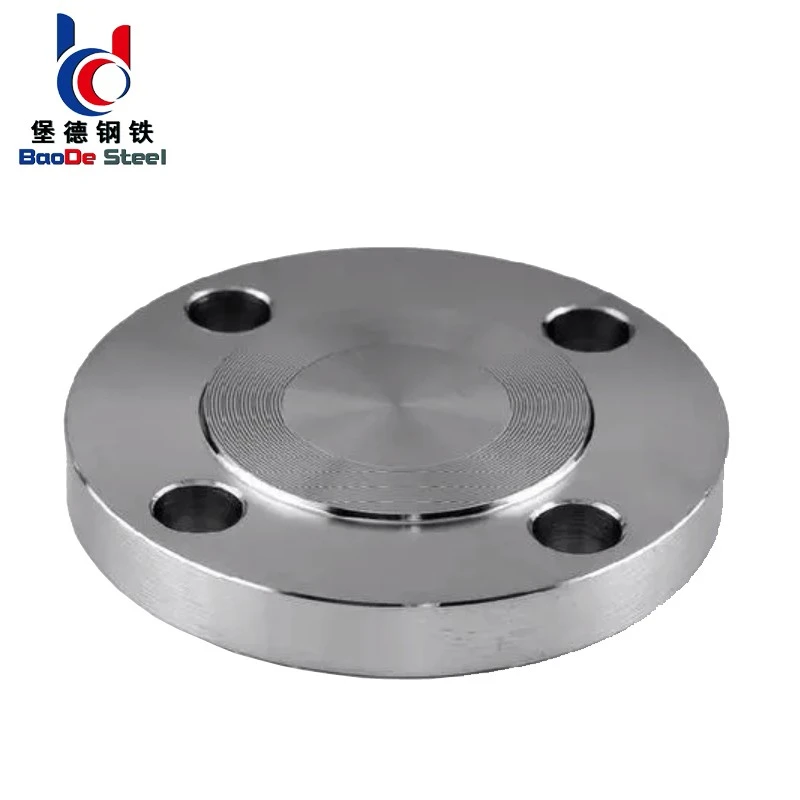
- Carbon Steel: Carbon steel is a widely used material for RF Blind Flanges due to its relatively low cost and good mechanical properties. The linear thermal expansion coefficient of carbon steel is approximately 11.7 x 10⁻⁶ °C⁻¹ (6.5 x 10⁻⁶ °F⁻¹). This means that for every 1°C increase in temperature, a carbon steel RF Blind Flange with an original length of 1 meter will expand by approximately 11.7 micrometers.
- Stainless Steel: Stainless steel is known for its corrosion resistance, making it suitable for applications in harsh environments. Different grades of stainless steel have slightly different thermal expansion coefficients. For example, the linear thermal expansion coefficient of 304 stainless steel is approximately 17.2 x 10⁻⁶ °C⁻¹ (9.6 x 10⁻⁶ °F⁻¹), while the linear thermal expansion coefficient of 316 stainless steel is approximately 16.0 x 10⁻⁶ °C⁻¹ (8.9 x 10⁻⁶ °F⁻¹).
- Alloy Steel: Alloy steel is a type of steel that contains other elements in addition to carbon to improve its mechanical properties. The thermal expansion coefficient of alloy steel depends on the specific alloy composition. For example, some high - strength alloy steels may have a thermal expansion coefficient similar to carbon steel, while others may have different values.
Importance of Thermal Expansion Coefficient in RF Blind Flanges
The thermal expansion coefficient is an important consideration in the design and installation of RF Blind Flanges. When the temperature of the pipeline or vessel changes, the RF Blind Flange will expand or contract accordingly. If the thermal expansion is not properly accounted for, it can lead to several problems:
- Leakage: If the thermal expansion of the RF Blind Flange is not compatible with the expansion of the pipeline or vessel, it can cause stress on the flange connection, leading to leakage. This is especially critical in applications where the fluid or gas being transported is hazardous or valuable.
- Structural Damage: Excessive thermal stress can also cause structural damage to the RF Blind Flange or the pipeline. This can lead to cracks or deformation, which may require costly repairs or replacements.
To prevent these problems, engineers need to consider the thermal expansion coefficient when selecting RF Blind Flanges and designing the pipeline system. They may use expansion joints or flexible connectors to accommodate the thermal expansion and reduce the stress on the flange connections.
Related Products and Standards
In addition to RF Blind Flanges, there are other related products such as Flange Blind Plates and ASME B16.48 Steel Line Figure 8 Blanks Spectacle Blind. These products also need to consider the thermal expansion coefficient in their design and application.
The ASME B16.48 standard provides specifications for steel line figure 8 blanks and spectacle blinds. This standard ensures the quality and compatibility of these products in different industrial applications. When selecting RF Blind Flanges or related products, it is important to comply with relevant standards to ensure the safety and reliability of the pipeline system.
Contact for Procurement
If you are interested in purchasing RF Blind Flanges or have any questions about their thermal expansion coefficient or other technical aspects, please feel free to contact us. We are a professional supplier of RF Blind Flanges, and we can provide you with high - quality products and professional technical support. Our team of experts is ready to assist you in finding the most suitable solutions for your specific applications.
References
- "Materials Science and Engineering: An Introduction" by William D. Callister Jr. and David G. Rethwisch.
- ASME B16.48 - 2013, "Steel Line Figure 8 Blanks and Spectacle Blinds".