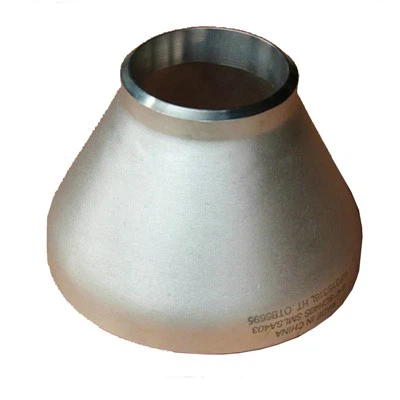
Fluid flow noise in butt welded reducers is a common issue that can cause various problems in many industrial applications. As a supplier of Butt Welded Reducer, we understand the significant impact of this noise on the performance and comfort of systems. In this blog post, we will discuss effective strategies to reduce the noise generated by fluid flow in butt welded reducers.
Understanding the Causes of Fluid - Flow Noise in Butt Welded Reducers
To address the problem of fluid - flow noise, it is essential to first understand its root causes. Fluid flow noise in butt welded reducers mainly results from the sudden change in the cross - sectional area of the pipe, which leads to alterations in fluid velocity and pressure. When the fluid passes through a butt welded reducer, it experiences a rapid acceleration or deceleration, depending on whether the reducer is a reducing or an expanding type. This velocity and pressure change generates turbulence, which is the primary source of noise.
Turbulence is more likely to occur when the flow rate is high, the fluid viscosity is low, or the size ratio of the reducer (the ratio of the large diameter to the small diameter) is significant. Additionally, the quality of the weld and the inner surface finish of the reducer can also affect the noise level. Rough welds or an uneven inner surface can disrupt the smooth flow of the fluid, exacerbating the formation of turbulence.
Design Considerations to Reduce Noise
Optimal Size Ratio
One of the key design aspects is to choose an appropriate size ratio for the butt welded reducer. A large size ratio will cause a more significant change in fluid velocity, increasing the likelihood of turbulence. By selecting a moderate size ratio, we can minimize the sudden change in flow characteristics. For example, if possible, avoid extreme size transitions such as Pipe Reducer 40mm To 32mm where the difference between the inlet and outlet diameters is relatively small in some applications. In larger - scale operations, a more gradual transition like a 3 Inch To 1.5 Inch Reducer should also be carefully considered based on the system requirements.
Streamlined Inner Surface
A smooth and streamlined inner surface of the butt welded reducer is crucial for reducing noise. A polished inner surface can help the fluid flow more smoothly, reducing the formation of eddies and turbulence. We can use advanced manufacturing processes such as precision machining and surface finishing to achieve a high - quality inner surface. Moreover, the weld joint should be carefully finished to ensure that it is flush with the inner surface, eliminating any potential flow disruptions.
Gradual Transition Design
In addition to the size ratio, the shape of the transition inside the reducer can also play an important role in noise reduction. Instead of a sharp change in diameter, a gradual and smooth transition can be designed. For example, using a conical shape or a blended transition can create a more laminar flow, reducing turbulence and noise. This type of design can be customized according to the specific application requirements of the customer.
Installation and Operation Measures
Proper Alignment
During the installation process, proper alignment of the butt welded reducer with the adjacent pipes is essential. Misalignment can cause additional turbulence and stress on the fluid flow, leading to increased noise. The reducer should be accurately aligned both axially and radially to ensure a seamless connection with the pipes. Laser alignment tools can be used to achieve high - precision alignment, especially in critical applications where minimal noise is required.
Flow Control
Controlling the flow rate of the fluid can also help reduce noise. High flow rates increase the likelihood of turbulence, so it is advisable to operate the system at an optimal flow rate. This can be achieved by adjusting the pumps or valves in the system. For example, using variable - speed pumps allows for better control of the flow rate according to the actual demand, reducing the potential for excessive turbulence and noise.
Vibration Isolation
Butt welded reducers can transmit vibrations caused by fluid flow to the surrounding pipes and structures, which can amplify the noise. To prevent this, vibration isolation measures can be implemented. This can include using flexible connectors between the reducer and the pipes, such as rubber or metal bellows. These connectors can absorb the vibrations and prevent them from spreading, reducing the overall noise level.
Maintenance and Monitoring
Regular Inspection
Regular inspection of the butt welded reducers is necessary to ensure their long - term performance and noise reduction. Inspections should focus on checking the inner surface for wear, corrosion, or damage. Any rough spots or defects should be repaired immediately to maintain the smooth flow of the fluid. Ultrasonic testing or other non - destructive testing methods can be used to detect internal defects that may not be visible to the naked eye.
Monitoring of Noise Level
Installing noise level sensors in the vicinity of the butt welded reducers can help monitor the performance over time. By continuously monitoring the noise level, any sudden increase in noise can be detected early, indicating potential problems such as blockages, wear, or improper operation. This allows for timely maintenance and adjustment to ensure the system operates at an acceptable noise level.
Conclusion
Reducing the noise generated by fluid flow in butt welded reducers is a multi - faceted task that involves design optimization, proper installation, careful operation, and regular maintenance. As a professional supplier of butt welded reducers, we are committed to providing high - quality products and solutions that meet the noise reduction requirements of our customers. By implementing the strategies mentioned in this article, we can effectively minimize the noise in fluid - flow systems, improving the efficiency and comfort of the operation.


If you are interested in our Butt Welded Reducer products or need more detailed information on noise reduction solutions, please feel free to contact us. Our experienced technical team can provide you with customized advice and support for your specific application.
References
- White, Frank M. Fluid Mechanics. McGraw - Hill Education, 2017.
- Munson, Bruce R., et al. Fundamentals of Fluid Mechanics. John Wiley & Sons, 2019.
- Streeter, Victor L., et al. Fluid Mechanics. McGraw - Hill Science/Engineering/Math, 1998.